Philosopher
Mencius
c. 372 – c. 289 BCE
Also known as Mengzi, Meng Ke
Known as the 'Second Sage' of Confucianism, he argued that human nature is good and that virtue grows from innate moral sprouts.
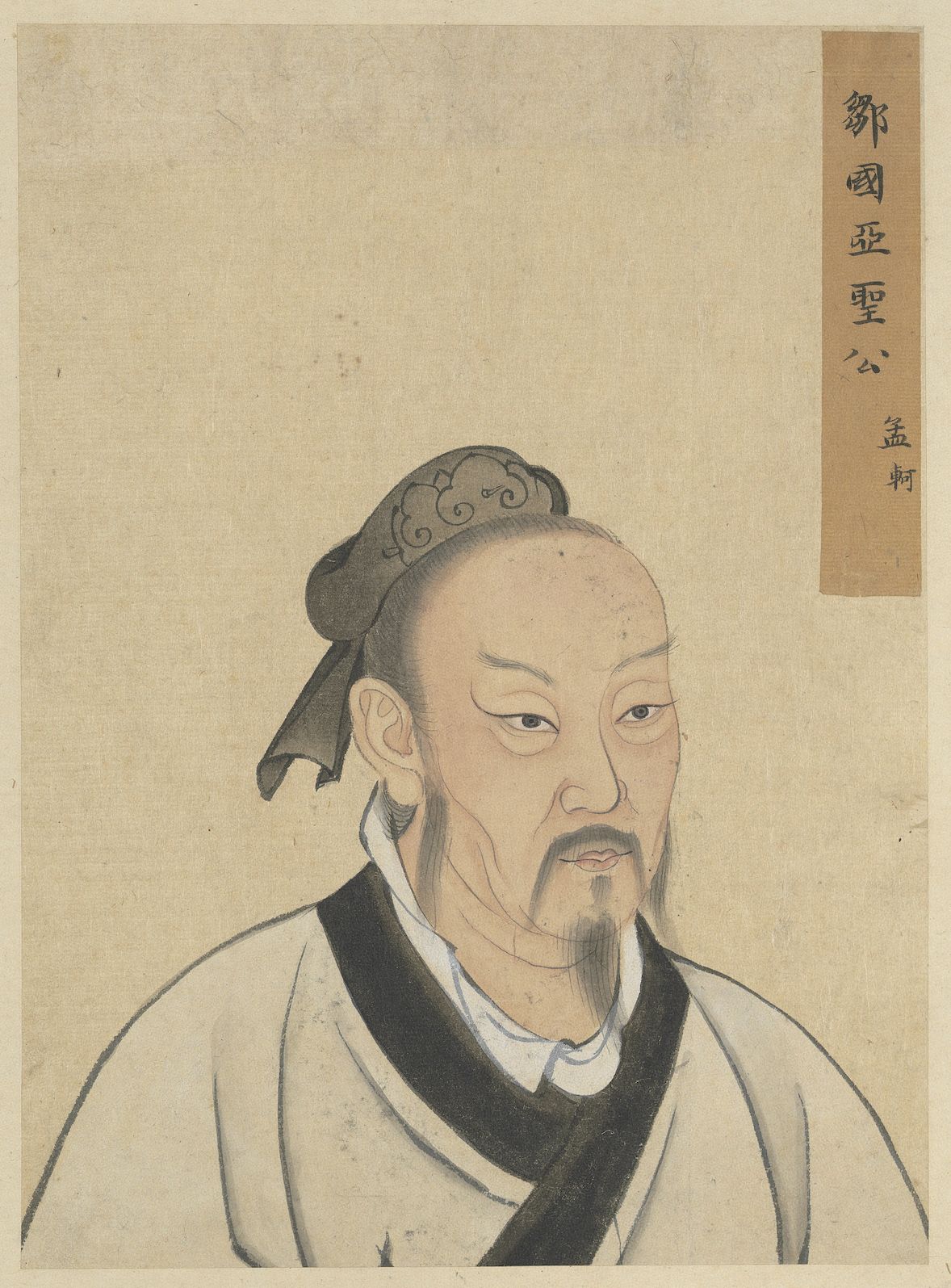
.jpg)
If men suddenly see a child about to fall into a well, they will without exception experience a feeling of alarm and distress.
Mencius defended and developed Confucius’s teachings against rival schools. His best-known claim is that human nature is good: everyone has the “sprouts” of benevolence, righteousness, propriety and wisdom, which need cultivating as a farmer tends crops. He also argued that a ruler who oppresses the people forfeits the right to rule.
His dates are traditional; the sources agree only that he lived in the fourth century BCE.
Key ideas
- Human nature is good
- Mencius’s best-known claim. People naturally grow towards goodness when they are raised in surroundings that nourish them. When people become bad, it isn’t the fault of their potential.
- The four sprouts
- Everyone has innate but incipient tendencies towards benevolence, righteousness, propriety and wisdom, seen in feelings such as compassion for the suffering of others. Like sprouts, they must be cultivated to grow into virtues.
- Graded concern
- Benevolence reaches from love of one’s family to compassion for strangers and even animals, but it isn’t impartial. We have greater obligations to relatives, teachers and friends than to strangers.
- Benevolent government
- A truly benevolent ruler notices how his policies affect his people and pursues only those consistent with their well-being. He warned that trying to conquer the world by war is as hopeless as “climbing a tree in search of a fish”.
- Tradition
- Chinese
- Region
- State of Zou
- Schools
- Confucianism
- Period
- Classical Chinese
Influences
Influenced by
Menciusc. 372 – c. 289 BCE
Influenced
Before 500 CE
500 CE – 1400
1400 – 1800
Influenced by
Menciusc. 372 – c. 289 BCE
Influenced
Before 500 CE
500 CE – 1400
1400 – 1800
Where these links come from
- Mencius drew on Confucius. Source: Bryan Van Norden, Mencius, Stanford Encyclopedia of Philosophy
- Mencius argued against Mozi. Source: Bryan Van Norden, Mencius, Stanford Encyclopedia of Philosophy
- Zhuangzi argued against Mencius. Source: Chad Hansen, Zhuangzi, Stanford Encyclopedia of Philosophy
- Xunzi argued against Mencius. Source: Paul R. Goldin, Xunzi, Stanford Encyclopedia of Philosophy
- Wang Chong drew on and argued against Mencius. Source: Alexus McLeod, Wang Chong (Wang Ch’ung), Internet Encyclopedia of Philosophy
- Zhou Dunyi drew on Mencius. Source: John Thompson, Dunyi, Zhou, Internet Encyclopedia of Philosophy
- Zhang Zai drew on Mencius. Source: David Elstein, Zhang Zai (Chang Tsai), Internet Encyclopedia of Philosophy
- Cheng Yi drew on Mencius. Source: Wai-ying Wong, Cheng Yi, Internet Encyclopedia of Philosophy
- Zhu Xi drew on Mencius. Source: Kirill Thompson, Zhu Xi, Stanford Encyclopedia of Philosophy
- Wang Yangming drew on Mencius. Source: Bryan Van Norden, Wang Yangming, Stanford Encyclopedia of Philosophy
- Dai Zhen drew on Mencius. Source: Frank Y. C. Chong and Chris Fraser, Dai Zhen, Stanford Encyclopedia of Philosophy
Key works
- Mencius (Mengzi)
- Read free at Wikisource (translated by James Legge)
Sources
- Bryan Van Norden, Mencius, Stanford Encyclopedia of Philosophy