Philosopher
Zhuangzi
fl. 350–300 BCE
Also known as Chuang-tzu, Zhuang Zhou
Daoist thinker whose playful, paradoxical stories question fixed points of view and celebrate a spontaneous, free-flowing way of life.
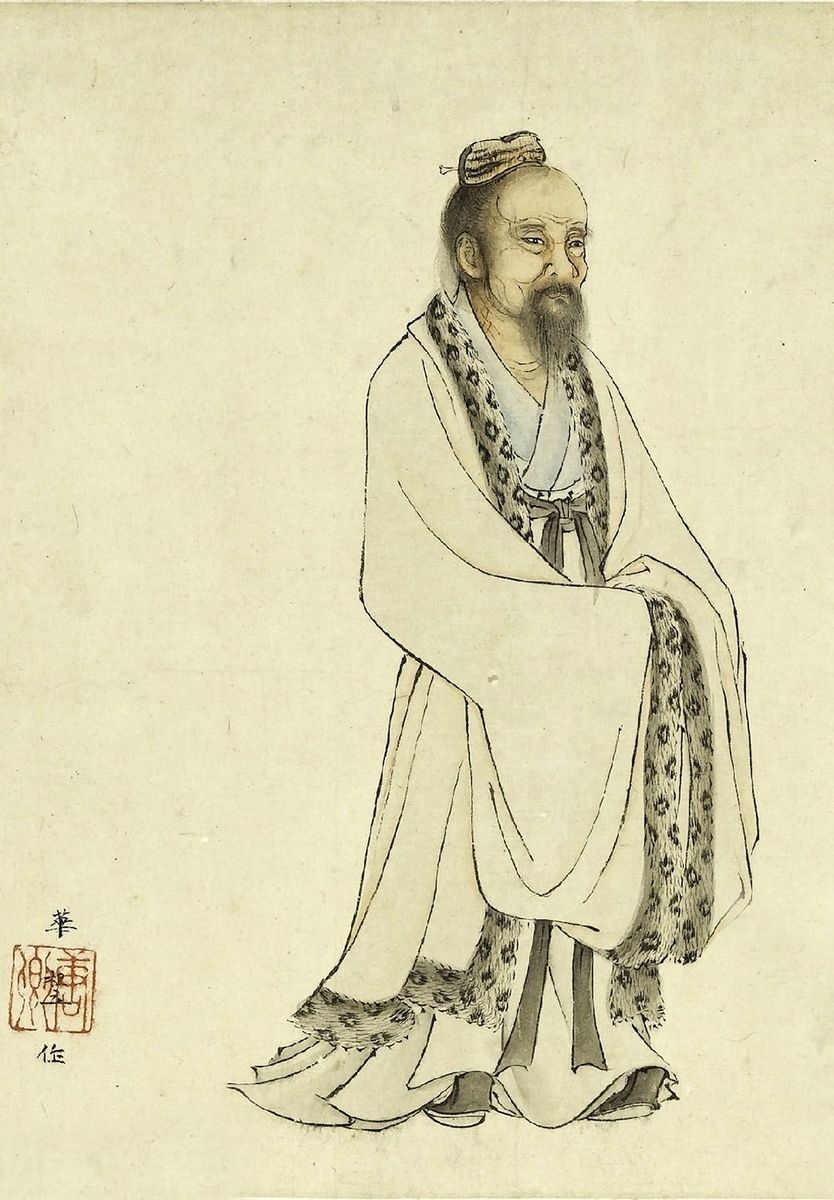
.jpg)
Now I do not know whether I was then a man dreaming I was a butterfly, or whether I am now a butterfly dreaming I am a man.
Zhuang Zhou, known as Zhuangzi (“Master Zhuang”), lived in the late fourth century BCE. The book that bears his name is a compilation: its first seven “inner chapters” are usually attributed to him, and the rest to followers and later writers.
Through stories, jokes and paradoxes, most famously his dream of being a butterfly, after which he could not tell whether he was Zhuang Zhou who had dreamed he was a butterfly or a butterfly dreaming it was Zhuang Zhou, he questioned whether any single perspective, including those of the debating schools of his day, could claim to be the right one. He recommended a flexible, spontaneous way of living in tune with the natural dao.
Key ideas
- Human ways are natural too
- Unlike the Laozi, Zhuangzi drew no sharp line between natural and social ways (dao). Human customs and language emerge from natural processes, just as birds tweet and frogs croak.
- “It depends on …”
- Judging something “this” (right) or “not that” (wrong) always depends on the standpoint it’s made from. Appeals to nature can’t settle which rival way is correct, because every way is equally natural.
- Scepticism
- Doubts can’t be settled by winning arguments or by appeal to a judge. “How would I know that what I call ‘knowing’ is not ‘not-knowing’?”
- The butterfly dream
- After dreaming he was a butterfly, Zhuangzi woke unsure whether he was a man who had dreamt he was a butterfly or a butterfly now dreaming it was Zhuangzi. A new perspective isn’t necessarily a truer one.
- Perspectives on perspectives
- Seeing ourselves as one kind of creature among many, each seeing things in its own way, humbles our pride in what we know and makes us more open-minded.
- Tradition
- Chinese
- Schools
- Daoism
- Period
- Classical Chinese
- Themes
- Knowledge and scepticism
Influences
Influenced by
Zhuangzifl. 350–300 BCE
Influenced
Influenced by
Zhuangzifl. 350–300 BCE
Influenced
Where these links come from
- Zhuangzi argued against Mozi. Source: Chad Hansen, Zhuangzi, Stanford Encyclopedia of Philosophy
- Zhuangzi argued against Mencius. Source: Chad Hansen, Zhuangzi, Stanford Encyclopedia of Philosophy
- Xunzi drew on Zhuangzi. Source: Paul R. Goldin, Xunzi, Stanford Encyclopedia of Philosophy
- Wang Bi drew on Zhuangzi. Source: Ronnie Littlejohn, Wang Bi (Wang Pi), Internet Encyclopedia of Philosophy
Key works
- Zhuangzi
- Read free at Project Gutenberg (translated by Herbert A. Giles)
Sources
- Chad Hansen, Zhuangzi, Stanford Encyclopedia of Philosophy