Philosopher
Zhou Dunyi
1017–1073
Also known as Chou Tun-i, Zhou Lianxi, Master Lianxi
Northern Song thinker, honoured as the first Neo-Confucian master, whose Diagram of the Supreme Polarity traced the cosmos from its source to human beings and the sage.
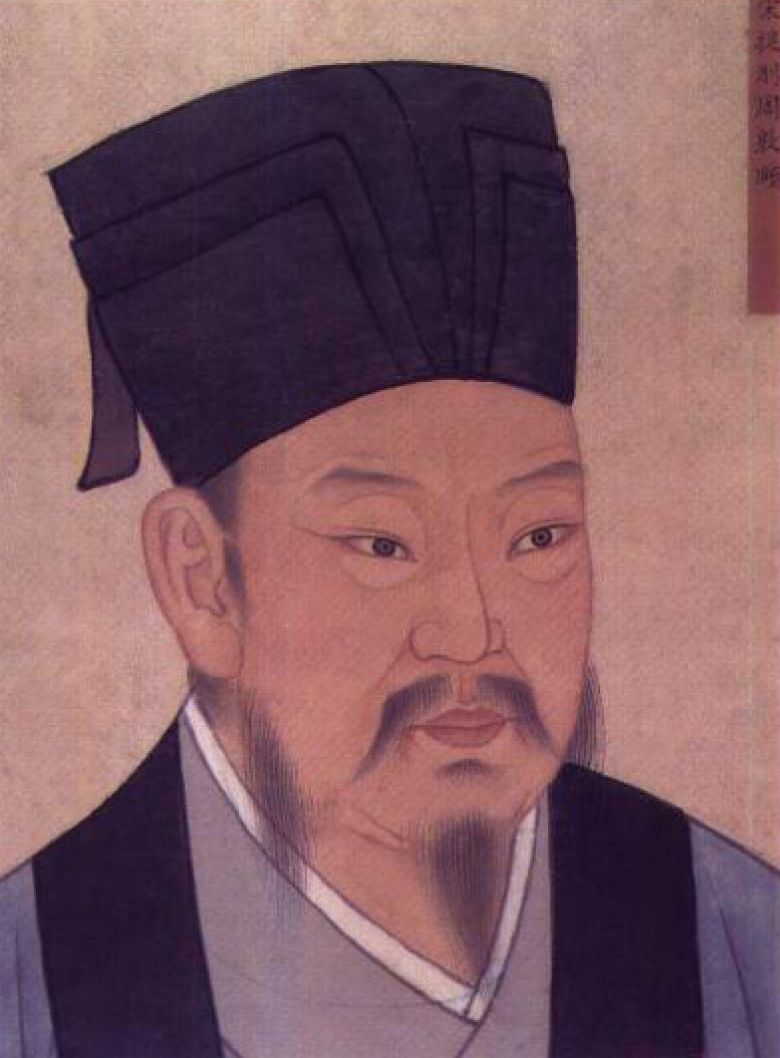

Zhou Dunyi was born in Daozhou, in modern Hunan, into a family of scholar-officials. He served as a local official but refused to sit the civil service examinations, so never rose high. He was not well known in his lifetime, though he briefly tutored the young Cheng Hao and Cheng Yi. Late in life he settled near Mount Lu, naming his retreat Lianxi, and he died about eighteen months after resigning office in 1071.
Unlike stricter Confucians, Zhou drew heavily on Daoist and Buddhist ideas, especially in his stress on stillness and his cosmology. Zhu Xi made him the first sage since Mencius and the founding ancestor of his school, placing the Explanation of the Diagram of the Supreme Polarity at the head of Reflections on Things at Hand; through Zhu’s synthesis, Zhou’s metaphysical framework shaped Chinese philosophy for centuries.
Key ideas
- Non-Polarity and yet Supreme Polarity
- The cosmos begins with the paradoxical “Non-Polarity (wuji), and yet Supreme Polarity (taiji)”. The Supreme Polarity gives rise to yin and yang, their interplay to the Five Phases, and these to the myriad things, human beings among them.
- The many are one
- All things form one dynamic, integrated system, not a formless One. “The two are fundamentally one. Thus the many are one, and the one actuality is divided into the many.”
- Authenticity (cheng)
- “Being authentic is the foundation of the sage.” To be authentic is to express one’s Heaven-given nature, still within while acting in the world; it is both the ground of our being and the root of moral action.
- The sage in daily life
- One set of norms governs both the cosmos and human life, and the sage embodies them, ordering human affairs by centrality, correctness, humaneness and rightness while remaining still. Sagehood is to be realised here and now.
- Tradition
- Chinese
- Region
- Northern Song China
- Schools
- Confucianism
- Period
- Song–Ming
- Themes
- What is ultimately real
Influences
Influenced by
Zhou Dunyi1017–1073
Influenced
Influenced by
Zhou Dunyi1017–1073
Influenced
Where these links come from
- Zhou Dunyi drew on Mencius. Source: John Thompson, Dunyi, Zhou, Internet Encyclopedia of Philosophy
- Cheng Yi studied with Zhou Dunyi. Source: Wai-ying Wong, Cheng Yi, Internet Encyclopedia of Philosophy
- Zhu Xi drew on Zhou Dunyi. Source: Kirill Thompson, Zhu Xi, Stanford Encyclopedia of Philosophy
Key works
- Explanation of the Diagram of the Supreme Polarity (Taijitu shuo)
- Read free at Wikisource (in Classical Chinese)
- Penetrating the Classic of Changes (Tongshu)
- Read free at Wikisource (in Classical Chinese)
- On the Love of the Lotus (Ai lian shuo)
- Read free at Wikisource (in Classical Chinese)
Sources
- John Thompson, Dunyi, Zhou, Internet Encyclopedia of Philosophy