Philosopher
Cheng Yi
1033–1107
Also known as Ch'eng I, Cheng Yichuan, Yichuan
Northern Song Neo-Confucian who made principle (li) the ground of all existence and morality, and taught cultivation through composure and investigating things.
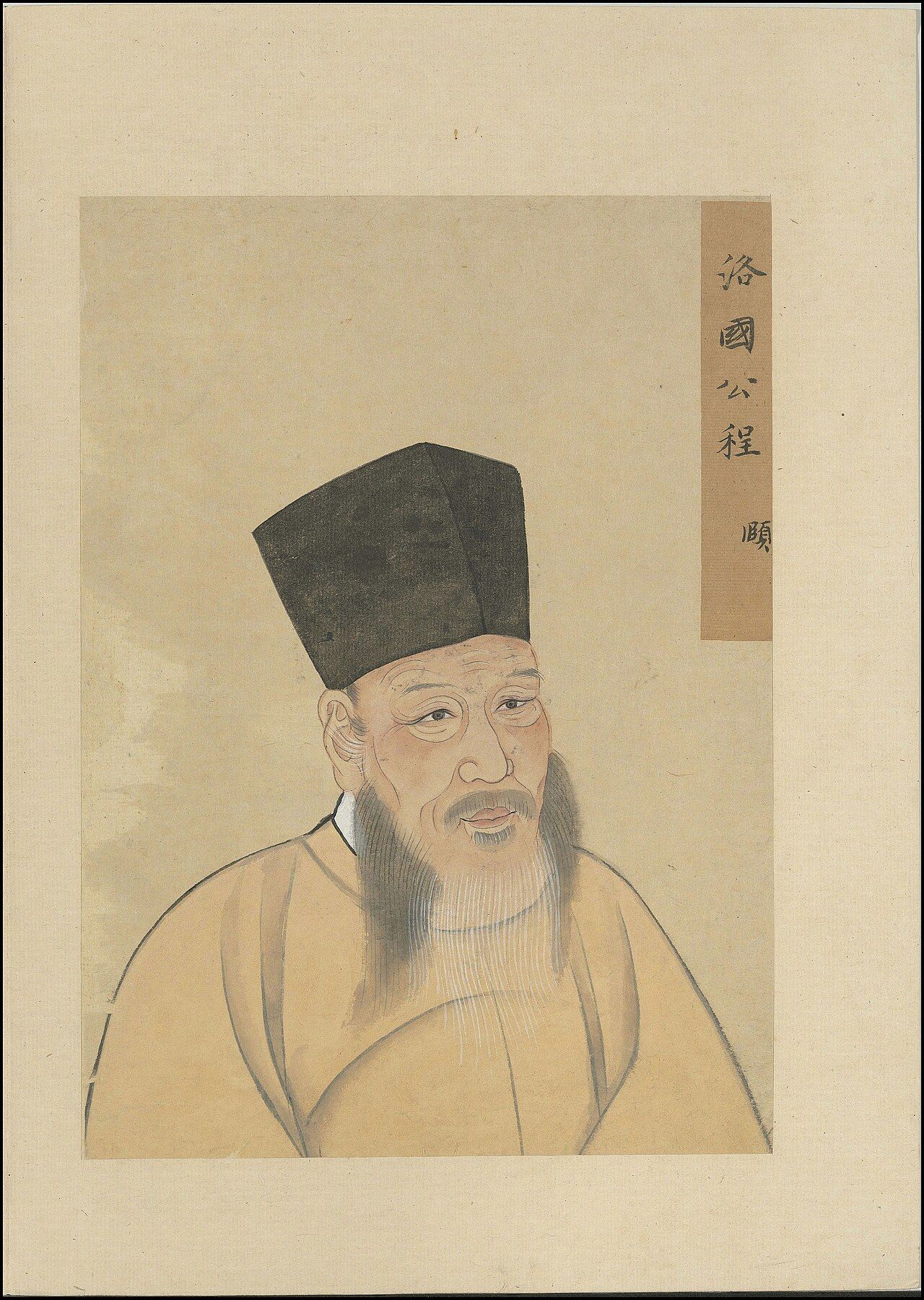

Cheng Yi, also known as Yichuan, came from a family of officials in Henan. At fourteen he and his elder brother Cheng Hao studied under Zhou Dunyi, and in the capital they became friends with Zhang Zai. He spent most of his life as a private teacher, repeatedly turning down office, though he lectured to the emperor for twenty months after 1085. In 1102 he was barred from teaching and his books were banned. He died in 1107.
With his brother he revived the tradition of Confucius and Mencius as the “study of the Way”, but where Cheng Hao’s thought led to the “study of the mind” of Lu Xiangshan and Wang Yangming, Cheng Yi’s became the “study of principle”. His ideas had a great impact on Zhu Xi, who built them into his own synthesis.
Key ideas
- Principle (li)
- Every thing has its principle, which makes it what it is, and all these principles are ultimately one. Principle accounts both for nature, as why fire is hot and water cold, and for morality, as why a father should be kind and a son filial.
- Principle and qi
- Principle is not the same as yin and yang but is what makes them alternate. Principle is “above form” and qi “below form”, yet the two never exist apart.
- Human nature is principle
- Human nature is identical with principle and so originally good. Evil comes not from our nature but from unbalanced and impure endowments of qi and of native capacity, an idea he shared with Zhang Zai.
- Composure and investigating things
- Cultivation has two sides. Composure (jing), keeping the mind unified and undistracted, preserves sincerity; investigating things, one after another, extends knowledge until one grasps the principles already within human nature.
- Tradition
- Chinese
- Region
- Northern Song China
- Schools
- Confucianism
- Period
- Song–Ming
- Themes
- What is ultimately real
Influences
Influenced by
Cheng Yi1033–1107
Influenced
Influenced by
Cheng Yi1033–1107
Influenced
Where these links come from
- Cheng Yi drew on Mencius. Source: Wai-ying Wong, Cheng Yi, Internet Encyclopedia of Philosophy
- Cheng Yi studied with Zhou Dunyi. Source: Wai-ying Wong, Cheng Yi, Internet Encyclopedia of Philosophy
- Cheng Yi drew on Zhang Zai. Source: Wai-ying Wong, Cheng Yi, Internet Encyclopedia of Philosophy
- Zhu Xi drew on Cheng Yi. Source: Kirill Thompson, Zhu Xi, Stanford Encyclopedia of Philosophy
Key works
- Commentary on the Book of Changes (Yichuan Yizhuan)
- Read free at Wikisource (in Classical Chinese)
- Works of the Cheng Brothers (Er Cheng ji)