Philosopher
Avicenna
c. 970 – 1037 CE
Also known as Ibn Sina, Abu Ali al-Husayn ibn Abd Allah ibn Sina
Philosopher and physician who built a comprehensive system from Aristotelian and Neoplatonic ideas, known for the distinction between essence and existence.
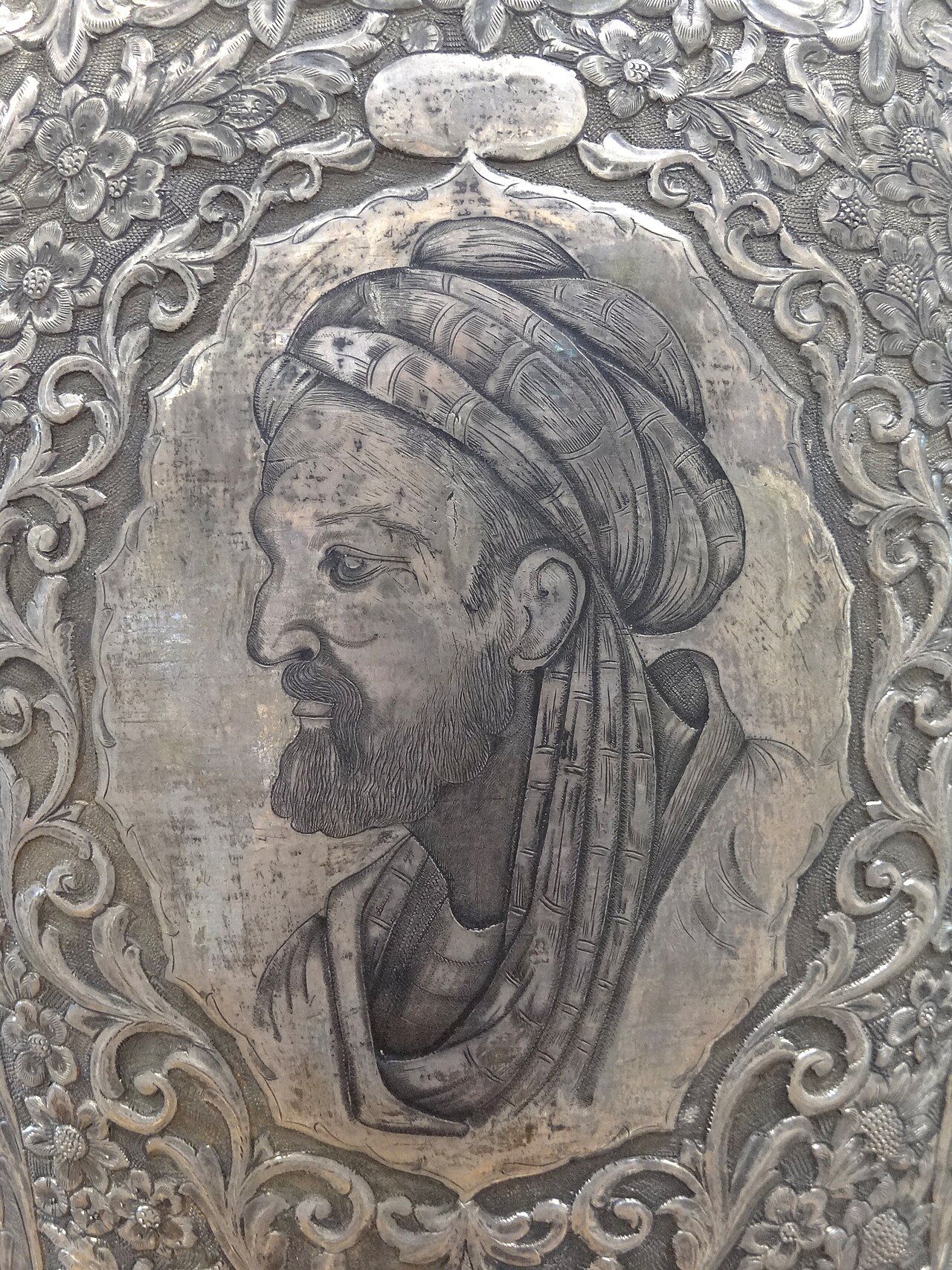
_Mausoleum_-_Hamadan_-_Western_Iran_(7423560860).jpg)
Ibn Sīnā, known in Latin as Avicenna, was the most influential philosopher of the Islamic world. He distinguished what a thing is (its essence) from the fact that it exists, and argued that everything whose existence is not part of its essence depends on a Necessary Existent — God. His thought experiment of the “floating man”, who is aware of himself without any sensation, anticipates Descartes.
His medical encyclopaedia, the Canon, was a standard textbook in Europe for centuries.
Key ideas
- Essence and existence
- What a thing is (its essence, or “quiddity”) is distinct from the fact that it exists. We can grasp what something is without knowing whether it exists at all.
- The Necessary Existent
- Considered in themselves, things are either merely possible or necessarily existent. Whatever exists necessarily in itself must be uncaused and unique; this is God, the first principle of everything else.
- Metaphysics as the first science
- Metaphysics is the science of being as being. Fusing Aristotle with the Neoplatonic idea of emanation, Avicenna made it include theology and cosmology and ground all the other sciences.
- Rationalist empiricism
- The senses are how the soul acquires knowledge, but certainty comes through reasoning. Its key is “hitting upon” the middle term of a syllogism (ḥads), a talent people have in varying degrees.
- Tradition
- Arabic and Islamic
- Region
- Persia and Central Asia
- Period
- Classical Islamic
Influences
Influenced by
Avicennac. 970 – 1037 CE
Influenced
500 CE – 1400
- al-Ghazalic. 1056 – 1111critic
- Averroes1126–1198critic
- Fakhr al-Din al-Razi1149–1210critic
- Suhrawardi1154–1191critic
- Ibn Arabi1165–1240
- Bonaventurec. 1221 – 1274
- Thomas Aquinasc. 1225 – 1274
- Ibn Taymiyya1263–1328critic
1400 – 1800
Influenced by
Avicennac. 970 – 1037 CE
Influenced
500 CE – 1400
- al-Ghazalic. 1056 – 1111critic
- Averroes1126–1198critic
- Fakhr al-Din al-Razi1149–1210critic
- Suhrawardi1154–1191critic
- Ibn Arabi1165–1240
- Bonaventurec. 1221 – 1274
- Thomas Aquinasc. 1225 – 1274
- Ibn Taymiyya1263–1328critic
1400 – 1800
Where these links come from
- Avicenna drew on Aristotle. Source: Dimitri Gutas, Ibn Sina [Avicenna], Stanford Encyclopedia of Philosophy
- Avicenna drew on Plotinus. Source: Dimitri Gutas, Ibn Sina [Avicenna], Stanford Encyclopedia of Philosophy
- Avicenna drew on al-Farabi. Source: Olga Lizzini, Ibn Sina’s Metaphysics, Stanford Encyclopedia of Philosophy
- al-Ghazali drew on and argued against Avicenna. Source: Frank Griffel, al-Ghazali, Stanford Encyclopedia of Philosophy
- Averroes argued against Avicenna. Source: Fouad Ben Ahmed and Robert Pasnau, Ibn Rushd [Averroes], Stanford Encyclopedia of Philosophy
- Fakhr al-Din al-Razi drew on and argued against Avicenna. Source: Peter Adamson and Fedor Benevich, Fakhr al-Din al-Razi, Stanford Encyclopedia of Philosophy
- Suhrawardi argued against Avicenna. Source: Roxanne Marcotte, Suhrawardi, Stanford Encyclopedia of Philosophy
- Ibn Arabi drew on Avicenna. Source: William Chittick, Ibn ‘Arabī, Stanford Encyclopedia of Philosophy
- Bonaventure drew on Avicenna. Source: Tim Noone, R. E. Houser and Joshua Benson, Bonaventure, Stanford Encyclopedia of Philosophy
- Thomas Aquinas drew on Avicenna. Source: Robert Pasnau, Thomas Aquinas, Stanford Encyclopedia of Philosophy
- Ibn Taymiyya drew on and argued against Avicenna. Source: Jon Hoover, Ibn Taymiyya, Stanford Encyclopedia of Philosophy
- Mulla Sadra drew on Avicenna. Source: Sajjad Rizvi, Mulla Sadra, Stanford Encyclopedia of Philosophy
Key works
- The Book of Healing (Kitab al-Shifa')
- The Canon of Medicine (Al-Qanun fi al-tibb)
Sources
- Dimitri Gutas, Ibn Sina [Avicenna], Stanford Encyclopedia of Philosophy
- Olga Lizzini, Ibn Sina’s Metaphysics, Stanford Encyclopedia of Philosophy