Philosopher
Averroes
1126–1198
Also known as Ibn Rushd, Abu al-Walid Muhammad ibn Ahmad ibn Rushd
Andalusian judge and philosopher whose commentaries on Aristotle earned him the title 'the Commentator' in medieval Europe.
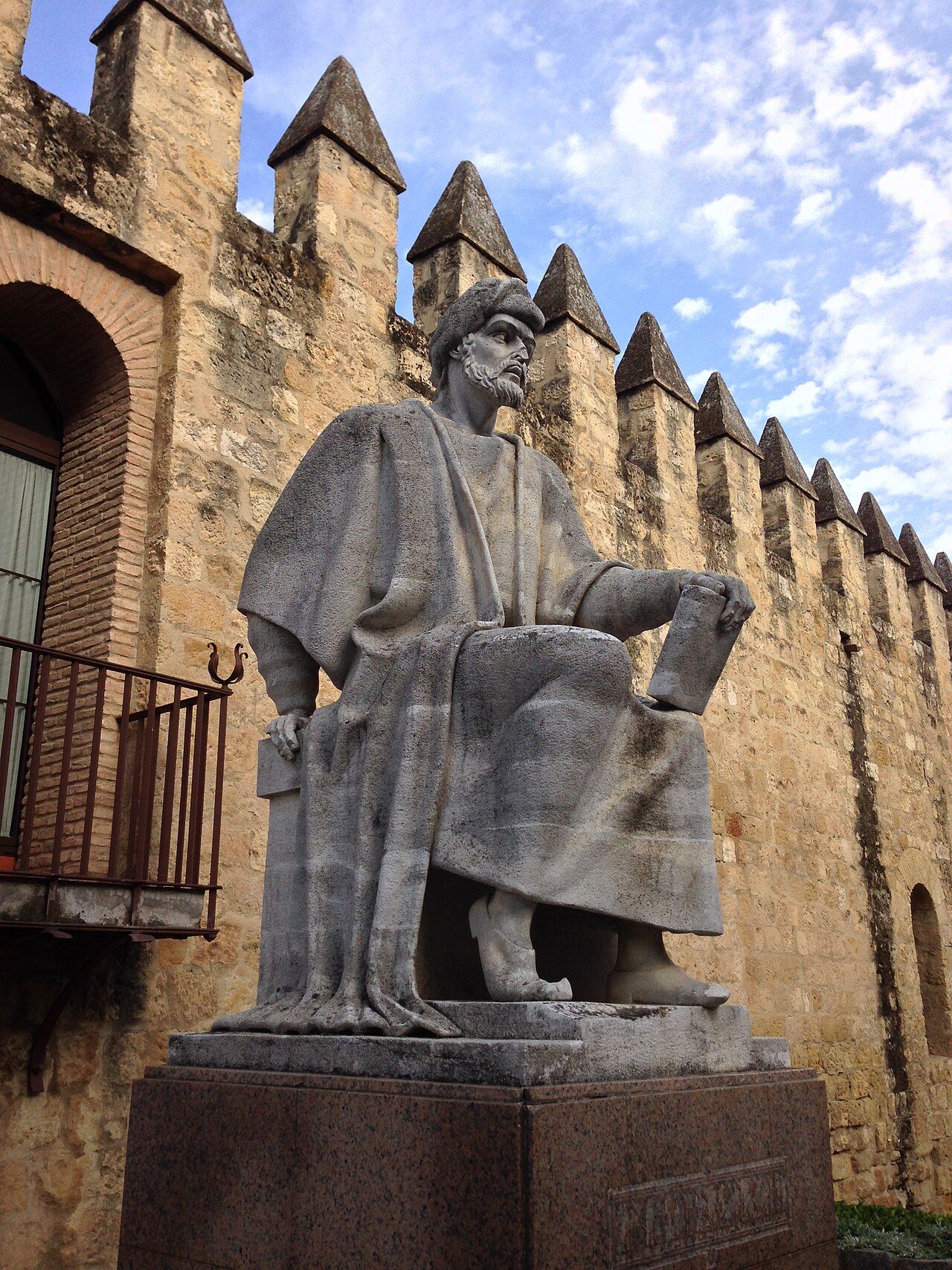

Ibn Rushd, known in Latin as Averroes, served as a judge and court physician in al-Andalus and Morocco. He wrote commentaries on almost all of Aristotle’s works and argued that philosophical demonstration and religious law, properly understood, cannot conflict. In The Incoherence of the Incoherence he defended philosophy against al-Ghazālī’s attack on it.
His commentaries had a greater influence in Latin Europe, where they fuelled the movement known as Averroism, than in the Islamic world.
Key ideas
- Truth does not oppose truth
- Demonstrative reasoning can’t disagree with what the religious law sets down, “for truth does not oppose truth, but rather agrees with and bears witness to it”. Philosophy belongs at the centre of religious inquiry, not as an alternative to religion.
- Aristotle as guide
- Averroes wrote commentaries on nearly all of Aristotle’s works, holding that no one after Aristotle had “been able to add a word worthy of attention” to what he said. In Latin Europe he became known simply as “the Commentator”.
- Against occasionalism
- Averroes scorned the theologians’ view that when a man pushes a stone, God and not the man creates the motion. Things have natures that determine what each of them does.
- One intellect for all
- In his final view, the “material” intellect by which we understand is, like the agent intellect, a single, separate, eternal substance that all human beings share. He admitted he had never seen the idea in anyone before him.
- Arguments for every audience
- Where strict demonstration isn’t practical, other kinds of argument must be used. Ordinary people are better persuaded of God’s existence by arguments from design, as in the Qur’an, than by the theologians’ abstract proofs.
- Tradition
- Arabic and Islamic
- Region
- Al-Andalus and Morocco
- Period
- Classical Islamic
- Themes
- Faith and reason
Influences
Influenced by
- Platoc. 429 – 347 BCEcriticised
- Aristotle384–322 BCE
- al-Farabic. 870 – c. 950 CEcriticised
- Avicennac. 970 – 1037 CEcriticised
- al-Ghazalic. 1056 – 1111criticised
- Avempacebefore 1085 – 1139criticised
Averroes1126–1198
Influenced
Influenced by
- Platoc. 429 – 347 BCEcriticised
- Aristotle384–322 BCE
- al-Farabic. 870 – c. 950 CEcriticised
- Avicennac. 970 – 1037 CEcriticised
- al-Ghazalic. 1056 – 1111criticised
- Avempacebefore 1085 – 1139criticised
Averroes1126–1198
Influenced
Where these links come from
- Averroes drew on and argued against Plato. Source: Fouad Ben Ahmed and Robert Pasnau, Ibn Rushd [Averroes], Stanford Encyclopedia of Philosophy
- Averroes drew on Aristotle. Source: Fouad Ben Ahmed and Robert Pasnau, Ibn Rushd [Averroes], Stanford Encyclopedia of Philosophy
- Averroes drew on and argued against al-Farabi. Source: Fouad Ben Ahmed and Robert Pasnau, Ibn Rushd [Averroes], Stanford Encyclopedia of Philosophy
- Averroes argued against Avicenna. Source: Fouad Ben Ahmed and Robert Pasnau, Ibn Rushd [Averroes], Stanford Encyclopedia of Philosophy
- Averroes argued against al-Ghazali. Source: Fouad Ben Ahmed and Robert Pasnau, Ibn Rushd [Averroes], Stanford Encyclopedia of Philosophy
- Averroes drew on and argued against Avempace. Source: Fouad Ben Ahmed and Robert Pasnau, Ibn Rushd [Averroes], Stanford Encyclopedia of Philosophy
- Thomas Aquinas drew on and argued against Averroes. Source: Robert Pasnau, Thomas Aquinas, Stanford Encyclopedia of Philosophy
- Meister Eckhart drew on Averroes. Source: Amber L. Griffioen, Meister Eckhart, Stanford Encyclopedia of Philosophy
- Gersonides drew on Averroes. Source: Tamar Rudavsky, Gersonides, Stanford Encyclopedia of Philosophy
Key works
- The Decisive Treatise (Fasl al-maqal)
- The Incoherence of the Incoherence (Tahafut al-tahafut)
Sources
- Fouad Ben Ahmed and Robert Pasnau, Ibn Rushd [Averroes], Stanford Encyclopedia of Philosophy