Philosopher
Bertrand Russell
1872–1970
British philosopher and logician who argued that mathematics reduces to logic, helped found analytic philosophy, and campaigned for peace.
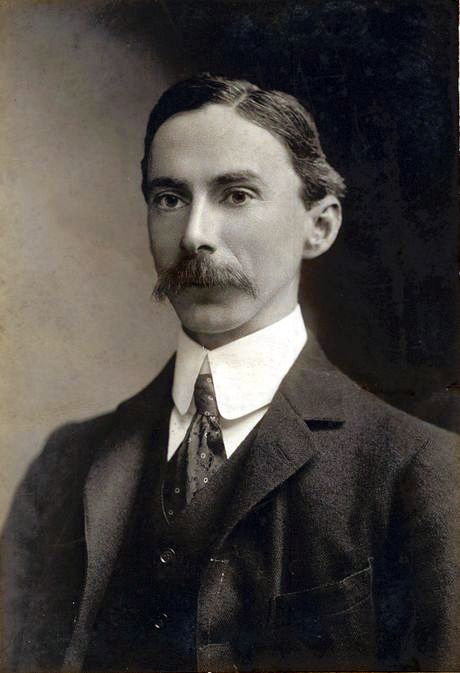

The good life is one inspired by love and guided by knowledge.
Bertrand Russell was a British logician and philosopher, and a prolific essayist and critic of society. With Alfred North Whitehead he wrote Principia Mathematica, which aimed to show that mathematics can be derived from logic, a programme threatened by the paradox that bears his name. His theory of descriptions, first set out in “On Denoting” (1905), became a model of philosophical analysis.
Russell was also a public intellectual: his writings against the First World War led to his dismissal from Trinity College, Cambridge, and later to five months in prison, and he campaigned against nuclear weapons late in life. He received the Nobel Prize in Literature in 1950. He was an early teacher of Wittgenstein.
Key ideas
- “Russell’s paradox”
- Consider the set of all sets that are not members of themselves. If it belongs to itself it doesn’t, and if it doesn’t, it does. Russell discovered the paradox in 1901, while working on his Principles of Mathematics.
- Logicism
- Russell argued that mathematics can, in an important sense, be reduced to logic. With Whitehead he developed the theory of types to avoid paradoxes like his own.
- Definite descriptions
- Phrases like “the author of Waverley” need not refer to anything to be meaningful. Logical analysis shows the underlying form of such sentences, so we don’t have to believe in the existence of golden mountains or unicorns.
- Philosophy as analysis
- Russell wanted a “scientific method” in philosophy, testing hypotheses against evidence and using the new logic to expose the logical form hidden beneath ordinary language. With G. E. Moore, he is generally recognised as a founder of analytic philosophy.
- Neutral monism
- The world consists of one kind of stuff that is neither exclusively mental nor exclusively physical. What we call mental and physical differ only in arrangement and context.
- Tradition
- Western
- Region
- England
- Period
- Contemporary
- Themes
- Language and meaning
Influences
Influenced by
- Gottfried Wilhelm Leibniz1646–1716criticised
- Immanuel Kant1724–1804criticised
- G. W. F. Hegel1770–1831criticised
- William James1842–1910
- Gottlob Frege1848–1925
- G. E. Moore1873–1958
Bertrand Russell1872–1970
Influenced
Influenced by
- Gottfried Wilhelm Leibniz1646–1716criticised
- Immanuel Kant1724–1804criticised
- G. W. F. Hegel1770–1831criticised
- William James1842–1910
- Gottlob Frege1848–1925
- G. E. Moore1873–1958
Bertrand Russell1872–1970
Influenced
Where these links come from
- Bertrand Russell argued against Gottfried Wilhelm Leibniz. Source: Andrew David Irvine, Bertrand Russell, Stanford Encyclopedia of Philosophy
- Bertrand Russell argued against Immanuel Kant. Source: Andrew David Irvine, Bertrand Russell, Stanford Encyclopedia of Philosophy
- Bertrand Russell argued against G. W. F. Hegel. Source: Andrew David Irvine, Bertrand Russell, Stanford Encyclopedia of Philosophy
- Bertrand Russell drew on William James. Source: Andrew David Irvine, Bertrand Russell, Stanford Encyclopedia of Philosophy
- Bertrand Russell drew on Gottlob Frege. Source: Andrew David Irvine, Bertrand Russell, Stanford Encyclopedia of Philosophy
- Bertrand Russell drew on G. E. Moore. Source: Andrew David Irvine, Bertrand Russell, Stanford Encyclopedia of Philosophy
- Ludwig Wittgenstein studied with, drew on and argued against Bertrand Russell. Source: Anat Biletzki and Anat Matar, Ludwig Wittgenstein, Stanford Encyclopedia of Philosophy
- W. V. O. Quine drew on Bertrand Russell. Source: Peter Hylton and Gary Kemp, Willard Van Orman Quine, Stanford Encyclopedia of Philosophy
Key works
- On Denoting, 1905
- Principia Mathematica
Sources
- Andrew David Irvine, Bertrand Russell, Stanford Encyclopedia of Philosophy