Philosopher
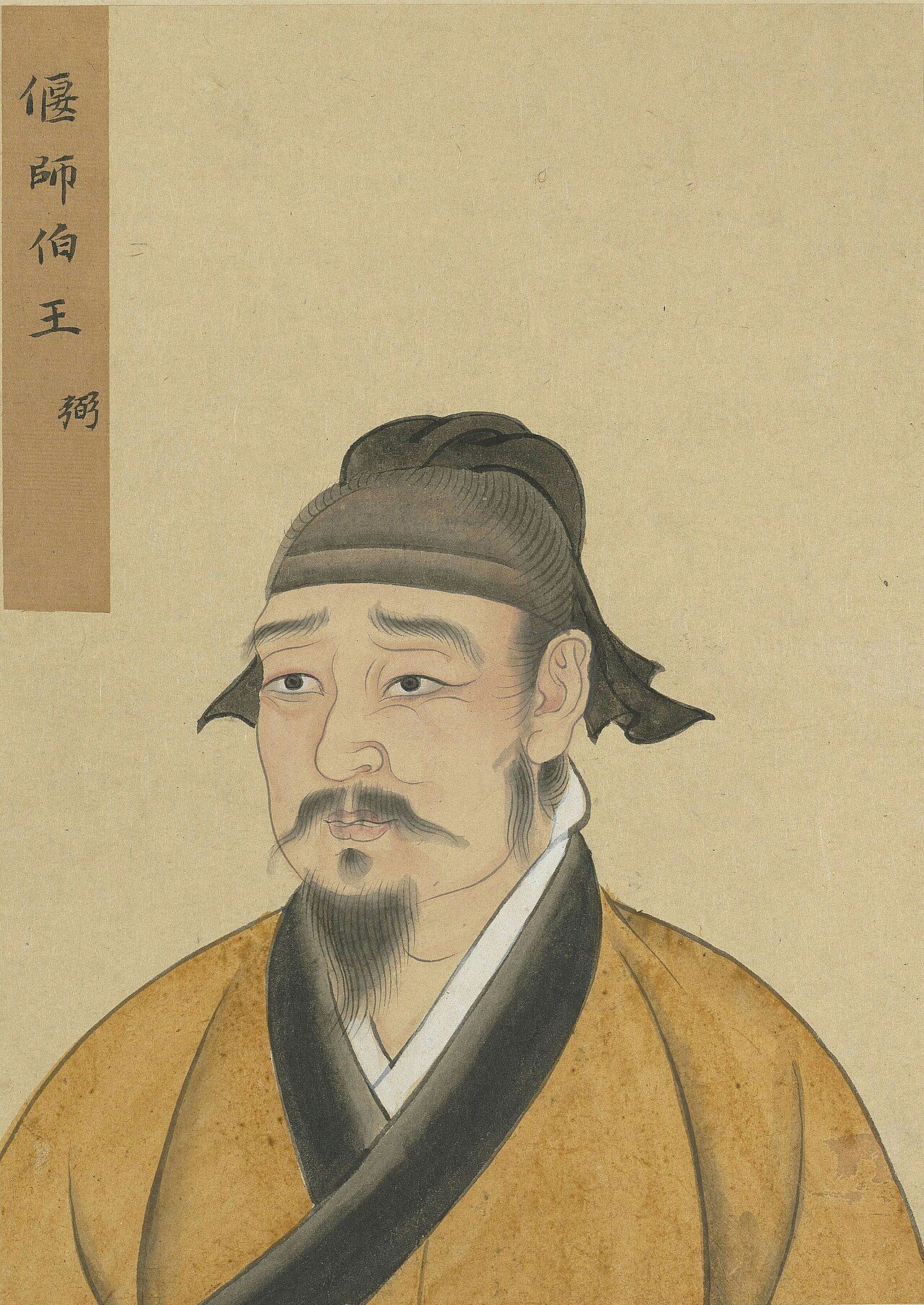
Wang Bi
226–249 CE
Also known as Wang Pi, Fusi
Neo-Daoist commentator, dead in his early twenties, who read the Dao as nothingness, the ground of all beings, and whose edition of the Laozi became the standard text.

Ziran is a term [that we use] to speak of that which has no designation; it is an expression that seeks to lay bare [the meaning of] the ultimate.
Wang Bi lived in the troubled decades after the fall of the Han dynasty in 220, when the educated elite were turning from Confucianism towards Daoism in search of a new basis for order. A protégé of the statesman He Yan, he died in his early twenties, having already written major commentaries on the Laozi and the Classic of Changes, and one on the Analects of which only fragments survive.
With He Yan he laid the foundations of Neo-Daoism, or “Learning in the Profound”. He saw himself as a Confucian, and read the Daoist classics in a way that did not undermine Confucius, whom he regarded as the true sage. The text of the Laozi transmitted with his commentary became the basis of almost every Western translation for nearly two centuries, and his reading of nothingness helped early Chinese Buddhists present the Mahāyāna idea of emptiness in familiar terms.
Key ideas
- The Dao as nothingness (wu)
- What gives rise to all beings cannot itself be a being, however powerful, or the question of its origin would arise again. So the Dao is not a primordial substance; “Dao” is only a name for nothingness (wu), the necessary ground of being.
- The One is not a number
- When the Laozi says the Dao gives birth to one, and one to two, “beginning” means logical priority, not a moment in time. The One is not a number or a thing but what makes all numbers possible, the single root of the world’s order.
- Forget the words to grasp the meaning
- Words can never capture the Dao and must be kept apart from their underlying meaning. Taking the classics’ words too literally blocks understanding; Wang read past them for the principles (li) behind them.
- The sage feels but is not burdened
- Against his patron He Yan, Wang held that the sage has the same emotions as everyone else. What sets him apart is a clarity of mind, like a polished mirror, that keeps him from being enslaved by them.
- Tradition
- Chinese
- Region
- Wei dynasty China
- Schools
- Neo-Daoism
Influences
Influenced by
Wang Bi226–249 CE
Influenced by
Wang Bi226–249 CE
Where these links come from
- Wang Bi drew on Laozi. Source: Ronnie Littlejohn, Wang Bi (Wang Pi), Internet Encyclopedia of Philosophy
- Wang Bi drew on Confucius. Source: Ronnie Littlejohn, Wang Bi (Wang Pi), Internet Encyclopedia of Philosophy
- Wang Bi drew on Zhuangzi. Source: Ronnie Littlejohn, Wang Bi (Wang Pi), Internet Encyclopedia of Philosophy
Key works
- Commentary on the Laozi (Laozi zhu)
- Read free at Wikisource (in Classical Chinese)
- Commentary on the Classic of Changes (Zhouyi zhu)
Sources
- Ronnie Littlejohn, Wang Bi (Wang Pi), Internet Encyclopedia of Philosophy
- Alan Chan, Neo-Daoism, Stanford Encyclopedia of Philosophy