Philosopher
Socrates
c. 470 – 399 BCE
Athenian who wrote nothing but, through relentless questioning about how to live, became the founding figure of Western moral philosophy.
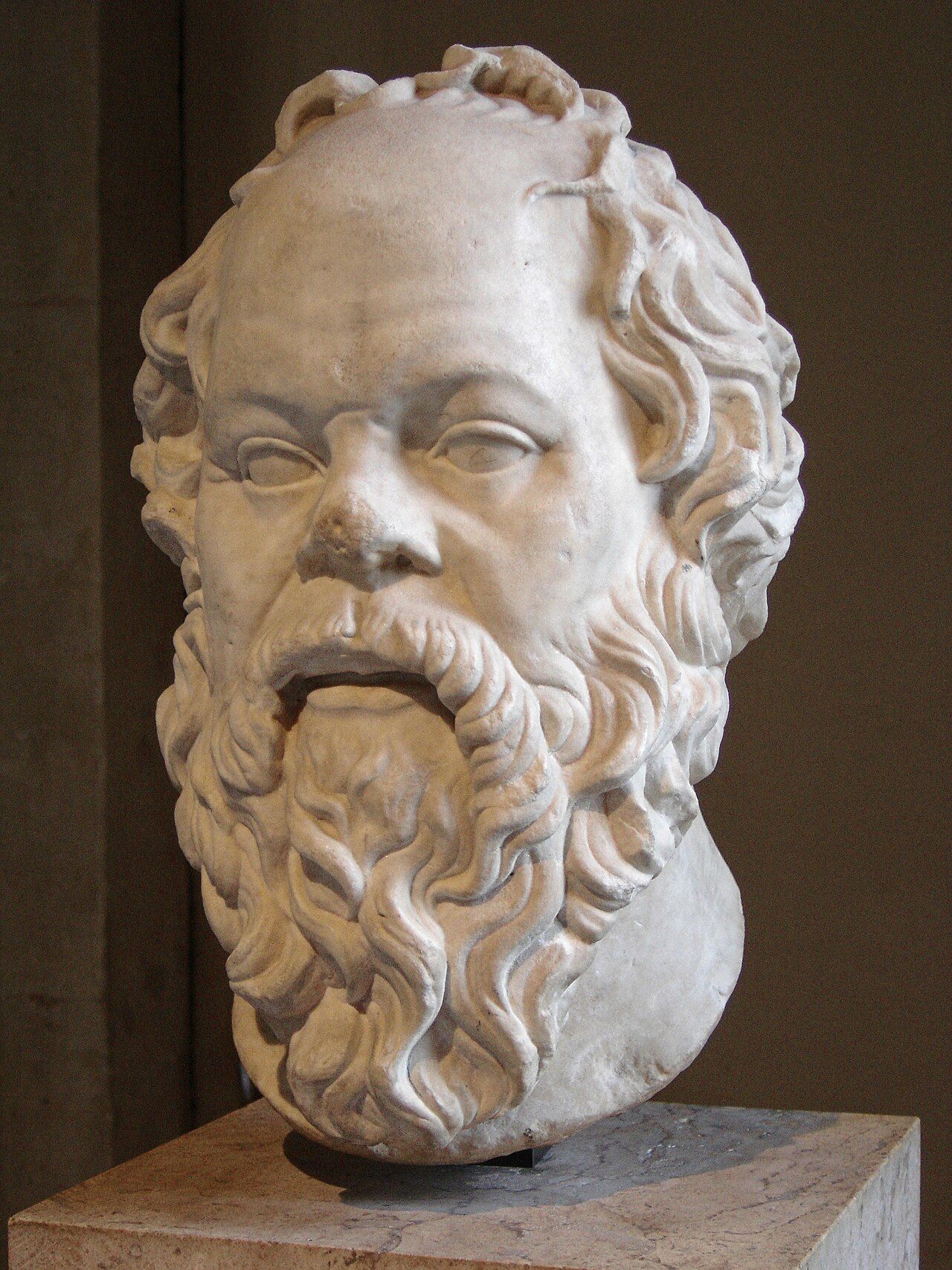

The unexamined life is not worth living.
Socrates spent his life in conversation in the streets of Athens, questioning people who claimed to know what justice, courage or piety are, and exposing the confusions in their answers. He claimed wisdom only in recognising his own ignorance. Because he wrote nothing, we know him mainly through the dialogues of his student Plato, and scholars still debate how far Plato’s Socrates is the historical one.
In 399 BCE he was tried for impiety and corrupting the young, and was executed by being made to drink hemlock.
Key ideas
- The examined life
- “The unexamined life is not worth living for a human being,” Socrates told the jury at his trial. His life’s work was examining his own life and the lives of others.
- Question and answer
- Socrates questioned people about what matters most, such as courage, reverence and moderation. He insisted he was no teacher, but helped others recognise for themselves what is real, true and good.
- Professed ignorance
- Socrates said he knew nothing of importance and only wanted to listen. His questioning left people realising their own ignorance, which sometimes gave way to real intellectual curiosity.
- Care for the soul
- Socrates saw it as his mission, which he believed the oracle of Apollo at Delphi had given him, to improve the souls of his fellow Athenians.
- Tradition
- Western
- Region
- Athens
- Period
- Ancient Greek and Roman
- Themes
- The good life
Influences
Socratesc. 470 – 399 BCE
Influenced
Socratesc. 470 – 399 BCE
Influenced
Where these links come from
- Plato studied with and drew on Socrates. Source: Richard Kraut, Plato, Stanford Encyclopedia of Philosophy
- Diogenes of Sinope drew on Socrates. Source: Julie Piering, Diogenes of Sinope, Internet Encyclopedia of Philosophy
- Chrysippus drew on Socrates. Source: Jeremy Kirby, Chrysippus, Internet Encyclopedia of Philosophy
- Epictetus drew on Socrates. Source: Margaret Graver, Epictetus, Stanford Encyclopedia of Philosophy
- Abu Bakr al-Razi drew on Socrates. Source: Peter Adamson, Abu Bakr al-Razi, Stanford Encyclopedia of Philosophy
- Søren Kierkegaard drew on Socrates. Source: John Lippitt and C. Stephen Evans, Søren Kierkegaard, Stanford Encyclopedia of Philosophy
Sources
- Debra Nails and S. Sara Monoson, Socrates, Stanford Encyclopedia of Philosophy