Philosopher
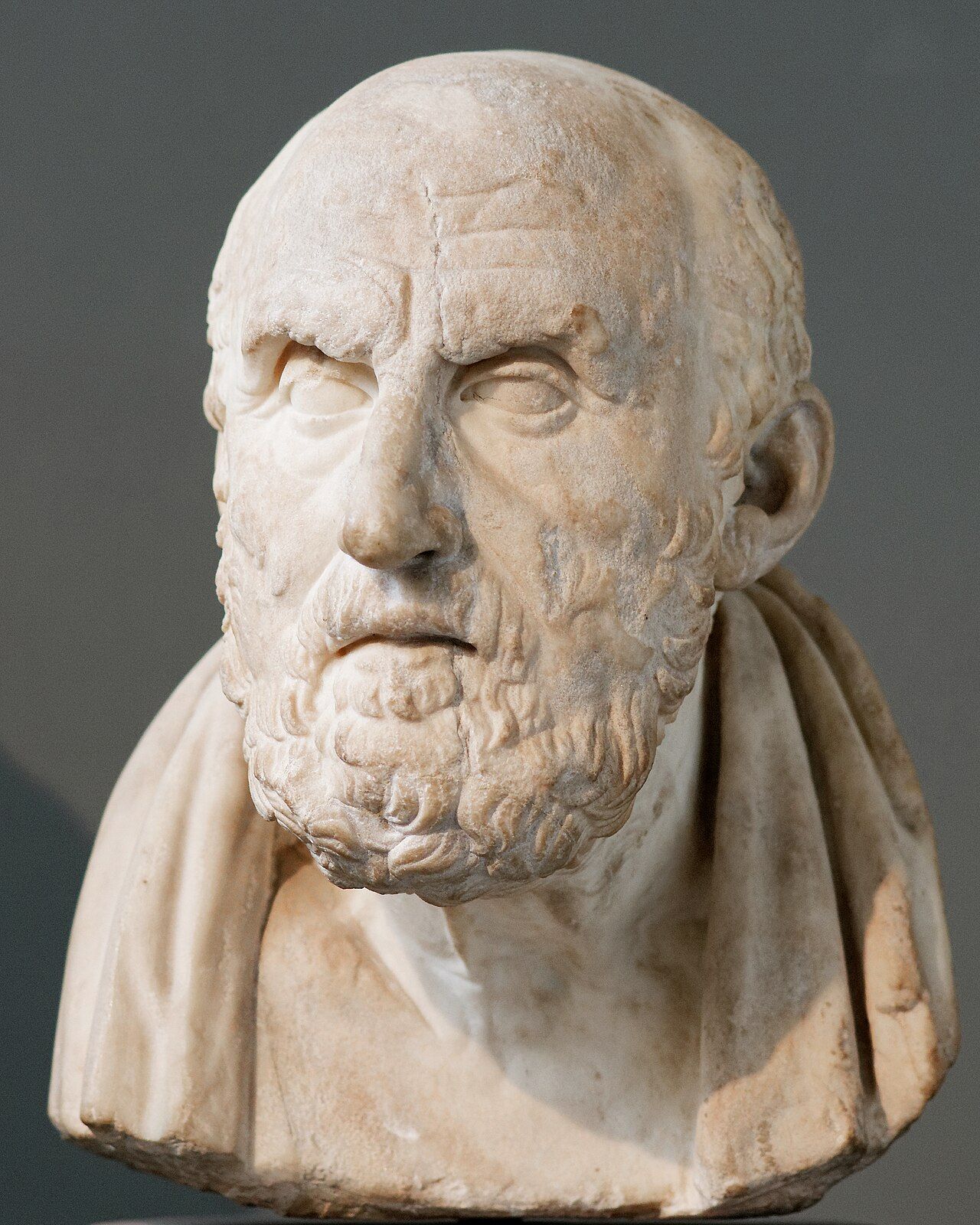
Chrysippus
c. 280 – c. 207 BCE
Also known as Chrysippus of Soli, Chrysippos
Third head of the Stoic school and its great systematiser, who developed a logic of propositions and argued that a fated world leaves room for moral responsibility.

There is no other or more appropriate way of approaching the theory of good and bad things or the virtues or happiness than from universal nature and from the administration of the world.
Chrysippus was born in Soli, near modern Mersin in Turkey, and is said to have been a long-distance runner before he came to Athens to study with Cleanthes, who had succeeded Zeno of Citium as head of the Stoic school. After teaching outside the school for some years, he succeeded Cleanthes in 230 BCE and died at seventy-three. He was a formidable dialectician; people said that if the gods practised logic, they would use his.
He wrote more than 700 books, none of which survives; he is known from about 475 fragments and reports, many of them from Diogenes Laertius, Plutarch and Cicero. Later Stoics said that without Chrysippus there would have been no Stoa, and the Academic sceptic Carneades said that without Chrysippus there would have been no Carneades. His system, materialist, determinist and rigorous in ethics and logic, set the terms for Stoicism into the Roman period, when Seneca, Epictetus and Marcus Aurelius continued it.
Key ideas
- A logic of propositions
- Where Aristotle’s logic relates classes of things (“all A are B”), Chrysippus built one on whole statements joined by “if”, “or”, “and” and “not”. He set out basic forms of valid argument, such as “if p then q; p; so q”, to which others could be reduced.
- Grasping impressions
- Knowledge starts from the senses. Some impressions come from a real object, match it exactly and are clear, and these “grasping” (cataleptic) impressions are the standard of truth. The mind starts blank, and concepts form from repeated experience.
- Fate and responsibility
- Everything happens by fate, an everlasting, unbreakable chain of causes ordered by providence. Yet he held that we are still responsible for what we do, an early form of the view, now called compatibilism, that determinism and freedom can coexist.
- Virtue is happiness
- Living virtuously and living happily are the same thing, and vice is the very essence of misery. Virtue is a kind of knowledge of good and evil, and that knowledge comes from studying nature, which is ordered by reason.
- Bodies and incorporeals
- Only bodies exist, the soul included, which is made of air and fire blended together. Time, place, the void and “sayables”, the meanings of what we say, are real but incorporeal; they don’t exist but subsist.
- Tradition
- Western
- Region
- Soli, Cilicia; Athens
- Schools
- Stoicism
- Period
- Ancient Greek and Roman
Influences
Influenced by
Chrysippusc. 280 – c. 207 BCE
Influenced
Influenced by
Chrysippusc. 280 – c. 207 BCE
Influenced
Where these links come from
- Chrysippus drew on Socrates. Source: Jeremy Kirby, Chrysippus, Internet Encyclopedia of Philosophy
- Chrysippus drew on and argued against Aristotle. Source: Jeremy Kirby, Chrysippus, Internet Encyclopedia of Philosophy
- Epictetus drew on Chrysippus. Source: Margaret Graver, Epictetus, Stanford Encyclopedia of Philosophy
Key works
- On Providence
- Physics
- On the Possibles
Sources
- Jeremy Kirby, Chrysippus, Internet Encyclopedia of Philosophy