Philosopher
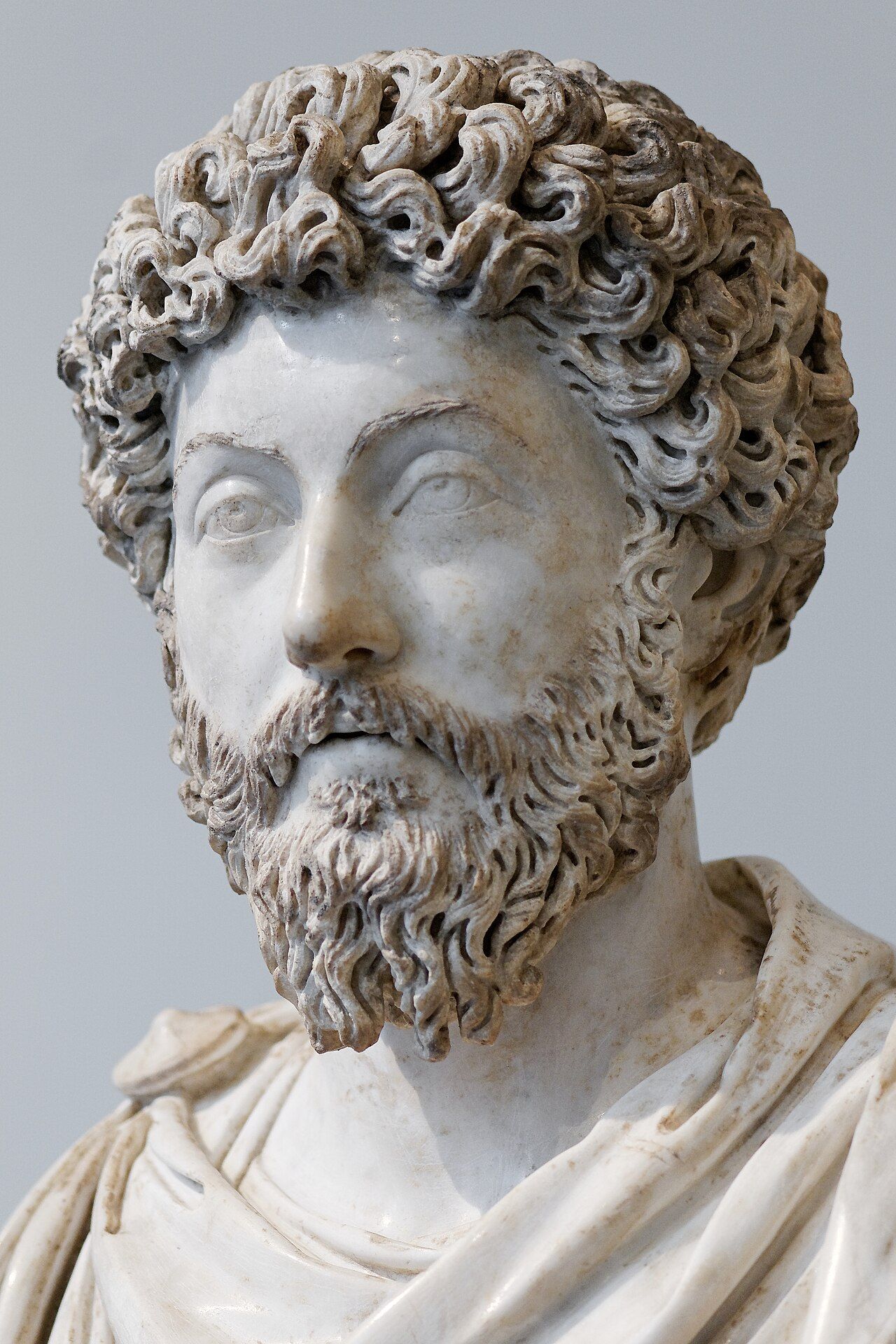
Marcus Aurelius
121–180 CE
Roman emperor and Stoic whose private notebook, the Meditations, shows him trying to live by the Stoic view that virtue is the only good.

The universe is transformation: life is opinion.
Marcus Aurelius ruled the Roman Empire from 161 until his death in 180, much of that time on military campaigns along the Danube. During those years he wrote the notes, in Greek, that we know as the Meditations: reminders addressed to himself rather than a work meant for publication.
The Meditations apply the Stoic teaching that only virtue is good and only vice bad, and that health, wealth, reputation and even death make no difference to whether a life goes well. He returns again and again to the brevity of life, the duty to serve the common good, and the discipline of judging events calmly.
Key ideas
- Only virtue is good
- Only virtue is good and only vice is bad. The things we usually worry about, such as health, wealth and reputation, are “indifferent”: having or lacking them doesn’t make our lives good or bad.
- Citizen of the cosmic city
- Wherever we live, we should live as citizens of the cosmic city and work for the good of all humanity. We may not hate even one person, because hatred tears the community apart.
- Welcoming what happens
- The cosmos is designed by providence and is as good as it can be, so we should accept, and even love, whatever the whole allots to us.
- “Erase impressions!”
- Things impress themselves on our minds unbidden, but whether we assent to those impressions is up to us. Marcus’s repeated command to himself is often read as telling him to drop the value judgements he adds to them.
- Providence or atoms?
- Marcus repeatedly weighed two possibilities, a world designed by providence or a random collision of atoms. Some readers take his point to be that either way, we must live rationally and rise above conventional goods and evils.
- Tradition
- Western
- Region
- Rome
- Schools
- Stoicism
- Period
- Ancient Greek and Roman
- Themes
- The good life
Influences
Influenced by
Marcus Aurelius121–180 CE
Influenced by
Marcus Aurelius121–180 CE
Where these links come from
- Marcus Aurelius drew on Heraclitus. Source: Rachana Kamtekar, Marcus Aurelius, Stanford Encyclopedia of Philosophy
- Marcus Aurelius drew on Plato. Source: Rachana Kamtekar, Marcus Aurelius, Stanford Encyclopedia of Philosophy
- Marcus Aurelius drew on Epicurus. Source: Rachana Kamtekar, Marcus Aurelius, Stanford Encyclopedia of Philosophy
- Marcus Aurelius drew on Epictetus. Source: Rachana Kamtekar, Marcus Aurelius, Stanford Encyclopedia of Philosophy
Key works
- Meditations (Ta eis heauton)
- Read free at Standard Ebooks (translated by George Long)
Sources
- Rachana Kamtekar, Marcus Aurelius, Stanford Encyclopedia of Philosophy