Philosopher
Thales
c. 624 – c. 546 BCE
Also known as Thales of Miletus
Traditionally counted the first Greek philosopher, he held that water is the origin of all things.
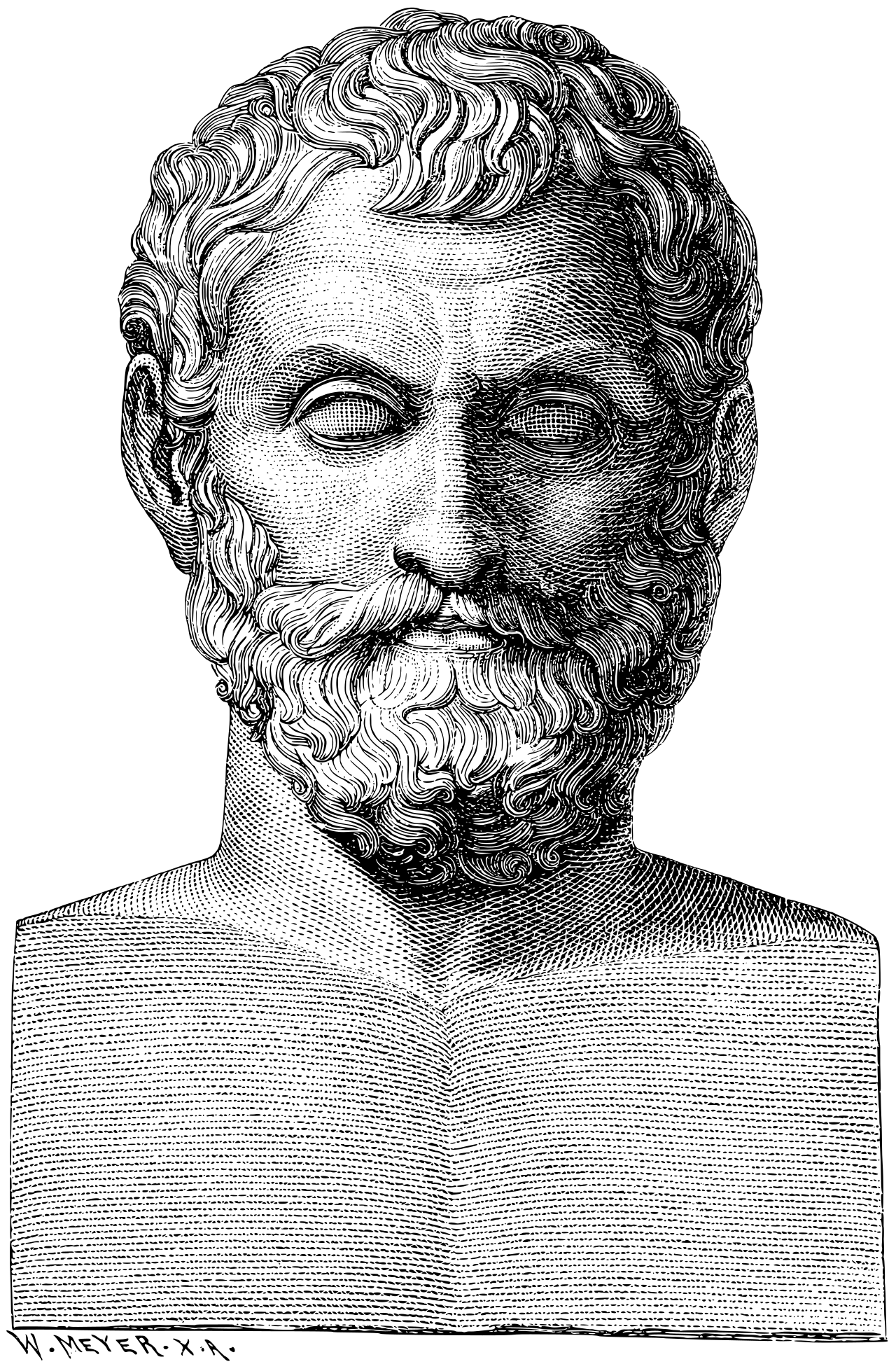

All things are full of gods.
Thales of Miletus left no writings, and what we know of him comes from later reports, above all Aristotle’s. He is credited with proposing that water is the basic principle (archē) of everything, and so with being the first to seek a single natural explanation for the world rather than a mythological one. Ancient sources also credit him with predicting a solar eclipse and with work in geometry.
His dates are those given by the ancient chronographer Apollodorus and are approximate.
Key ideas
- The first inquirer into nature
- For Aristotle, Thales was the first to look for the causes and principles of nature, unlike the poets before him, who explained the world with myths.
- Water as the first principle
- Thales declared water the first cause of things. As Aristotle understood him, water was both the original state of everything and, despite appearances, what things still are.
- Nature explains itself
- Thales explained the world through a basic stuff and the changes it undergoes by its own nature, with no call on gods intervening from outside. This marked a radical break with earlier accounts of the world.
- Tradition
- Western
- Region
- Miletus, Ionia
- Period
- Ancient Greek and Roman
Influences
Where these links come from
- Anaximander drew on Thales. Source: Patricia Curd, Presocratic Philosophy, Stanford Encyclopedia of Philosophy
- Xenophanes drew on Thales. Source: James Lesher, Xenophanes, Stanford Encyclopedia of Philosophy
Sources
- Patricia Curd, Presocratic Philosophy, Stanford Encyclopedia of Philosophy
- Diogenes Laërtius, Lives of Eminent Philosophers, book I