Philosopher
Anaximander
c. 610 – c. 546 BCE
Also known as Anaximander of Miletus
Milesian thinker who wrote the first Greek book of prose about nature, deriving all things from "the Boundless" and picturing an earth that floats unsupported in space.

… they make reparation and satisfaction to one another for their injustice according to the appointed time.
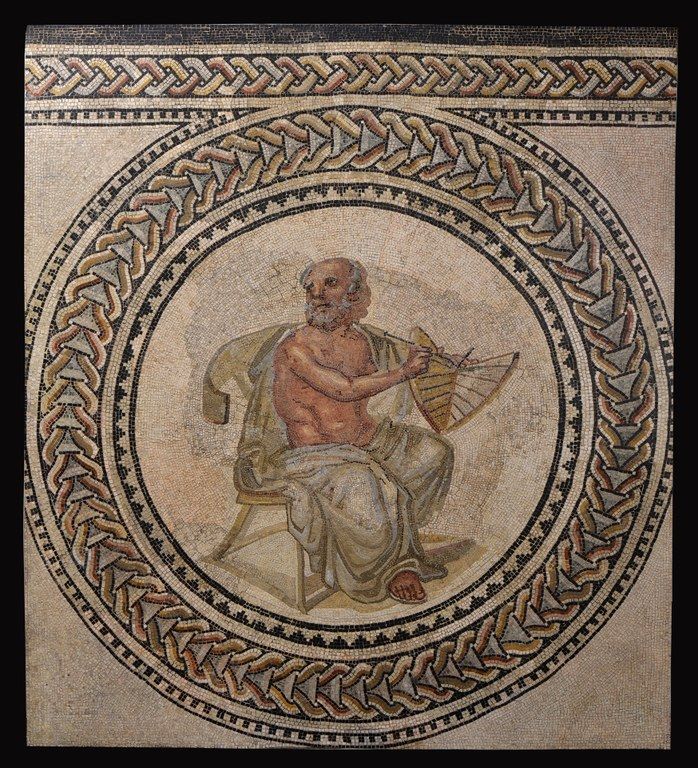
Anaximander came from Miletus, Thales’ city, and ancient writers call him Thales’ pupil and successor, although that tradition may not be reliable. He is said to have been the first to write a treatise in prose, later known as On Nature. It is lost apart from a single sentence, which the sixth-century commentator Simplicius preserved from Theophrastus; the rest of what we know comes from Aristotle, Theophrastus and the writers who drew on them. Reports also credit him with bringing the gnomon, the upright of a sundial, to Greece, and with leading the founding of a colony on the Black Sea.
Where Thales made water the source of things, Anaximander chose something with no boundaries and no fixed character, and he seems to have given arguments for it rather than simply stating it. Out of the Boundless came hot and cold, and from them the heavens and the earth. His picture of an earth hanging free, with the sun, moon and stars circling all the way round it, replaced the older image of the sky as a dome resting on the world.
Key ideas
- Apeiron, the Boundless
- The origin of everything is neither water nor any other element, but something without limits, the apeiron. Ancient readers already complained that he never said what it was, and scholars still debate whether it is limitless in size, in time or in character.
- Justice among opposites
- In his one surviving sentence, things pay one another penalty for their wrongdoing, in the order set by time. On one reading, this describes opposites such as hot and cold taking turns to dominate, a regular order within nature itself rather than the whim of gods.
- The earth floats free
- The earth is a flat-topped cylinder, like a drum of a column, and rests unsupported at the centre of everything. Being equally far from every side, it has no reason to move in one direction rather than another, so it stays where it is.
- The first map and the first animals
- He is credited with the first map of the inhabited world. He also held that life began in the moisture that once covered the earth, and that the first humans came from fish-like creatures, since a human baby needs protection for too long to have survived alone.
- Tradition
- Western
- Region
- Miletus, Ionia
- Period
- Ancient Greek and Roman
- Themes
- What is ultimately real
Influences
Influenced by
Anaximanderc. 610 – c. 546 BCE
Influenced
Influenced by
Anaximanderc. 610 – c. 546 BCE
Influenced
Where these links come from
- Anaximander drew on Thales. Source: Patricia Curd, Presocratic Philosophy, Stanford Encyclopedia of Philosophy
- Xenophanes drew on Anaximander. Source: James Lesher, Xenophanes, Stanford Encyclopedia of Philosophy
Key works
- On Nature
Sources
- Dirk L. Couprie, Anaximander, Internet Encyclopedia of Philosophy
- Patricia Curd, Presocratic Philosophy, Stanford Encyclopedia of Philosophy