Philosopher
Arthur Schopenhauer
1788–1860
Also known as Schopenhauer
German philosopher who held that the world at its core is a blind, restless Will, and that art, compassion and ascetic renunciation offer release from suffering.
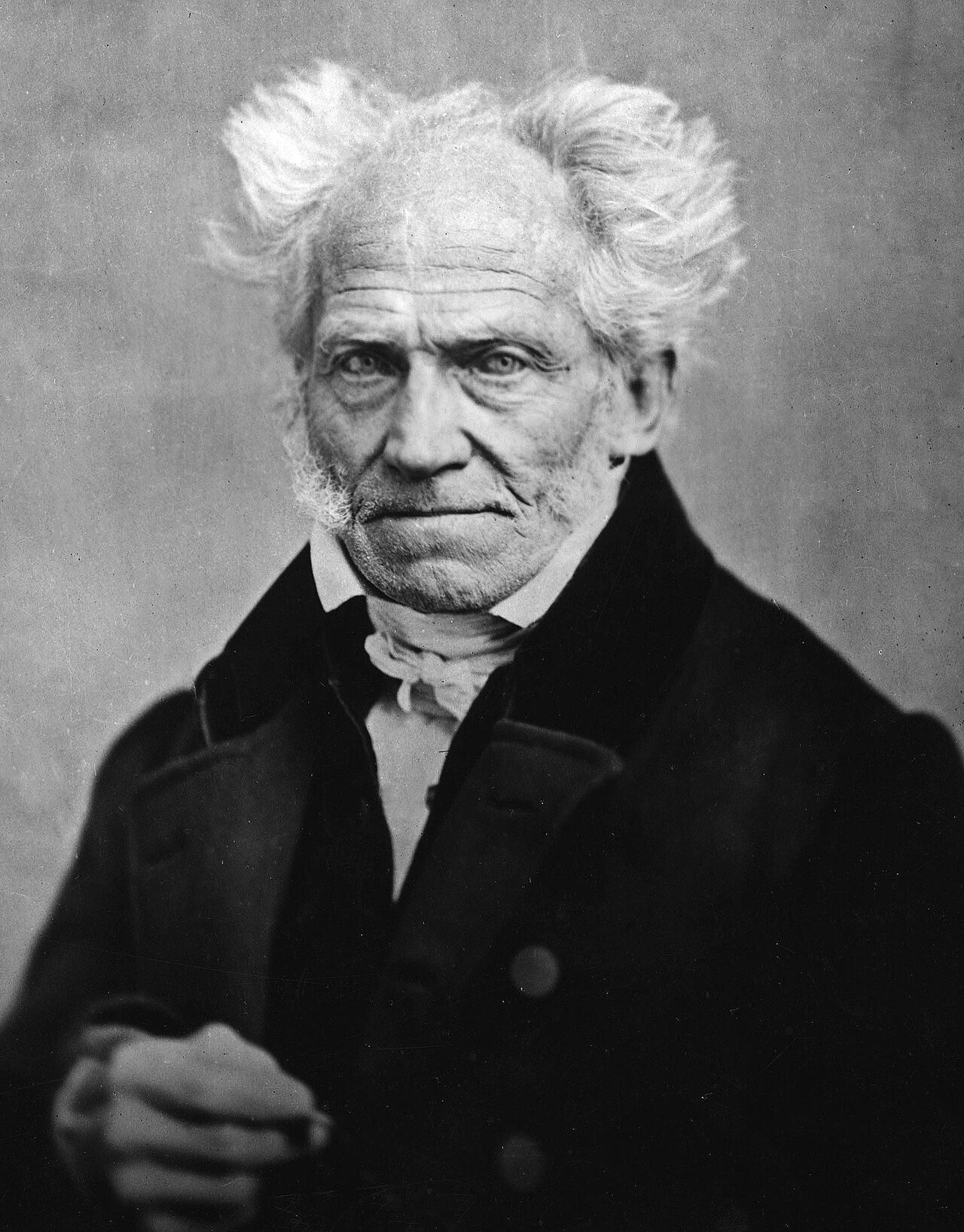

Human life must be some kind of mistake.
Schopenhauer was born in Danzig on 22 February 1788, the son of a wealthy merchant who expected him to take over the family business. After his father’s death he left his business apprenticeship to study, and in 1818 published The World as Will and Representation. From 1833 he lived in Frankfurt. Recognition came only in the 1850s, after the essays of Parerga and Paralipomena, and he died in 1860.
He was among the first nineteenth-century philosophers to argue that the universe is at its core not a rational place. He drew on Plato and Kant, and on Indian thought, which he read as confirming his ethics. Artists, writers and musicians have been especially drawn to his work, and his account of music attracted both Richard Wagner and Friedrich Nietzsche.
Key ideas
- The world as Will
- Looking inward, we find that our deepest nature is Will, a mindless, aimless striving, and this is the inner nature of everything. What sets Schopenhauer apart is that this Will has no reason or intellect in it.
- The world as representation
- Following Kant, the world we experience is representation, organised by the forms of our own minds. Schopenhauer rejected, though, Kant’s idea of an unknowable thing that causes our sensations.
- Life as suffering
- Because the Will is endless striving, life is filled with strife, frustration and pain; satisfaction brings only a brief absence of pain before boredom or new desire returns.
- Escape through art
- In aesthetic contemplation we forget ourselves and perceive the universal Idea shining through an individual thing. For that moment we are released from willing and its pain.
- Compassion and renunciation
- Morality rests on compassion, which grows once we see that all beings share one inner nature. The ascetic goes further, denying the will to live and reaching a tranquillity he likened to Buddhist and Hindu teachings.
- Tradition
- Western
- Region
- Frankfurt, Germany
- Period
- Late modern
Influences
Influenced by
Arthur Schopenhauer1788–1860
Influenced
Influenced by
Arthur Schopenhauer1788–1860
Influenced
Where these links come from
- Arthur Schopenhauer drew on Plato. Source: Robert Wicks, Arthur Schopenhauer, Stanford Encyclopedia of Philosophy
- Arthur Schopenhauer drew on and argued against Immanuel Kant. Source: Robert Wicks, Arthur Schopenhauer, Stanford Encyclopedia of Philosophy
- Friedrich Nietzsche drew on and argued against Arthur Schopenhauer. Source: R. Lanier Anderson, Friedrich Nietzsche, Stanford Encyclopedia of Philosophy
Key works
- On the Fourfold Root of the Principle of Sufficient Reason, 1813
- The World as Will and Representation (Die Welt als Wille und Vorstellung), 1818
- Parerga and Paralipomena, 1851
- Read free at Project Gutenberg (translated by T. Bailey Saunders, selections, as Studies in Pessimism)
Sources
- Robert Wicks, Arthur Schopenhauer, Stanford Encyclopedia of Philosophy