Philosopher
John Rawls
1921–2002
American political philosopher in the social contract tradition, whose A Theory of Justice asks what principles free and equal citizens would choose behind a veil of ignorance.
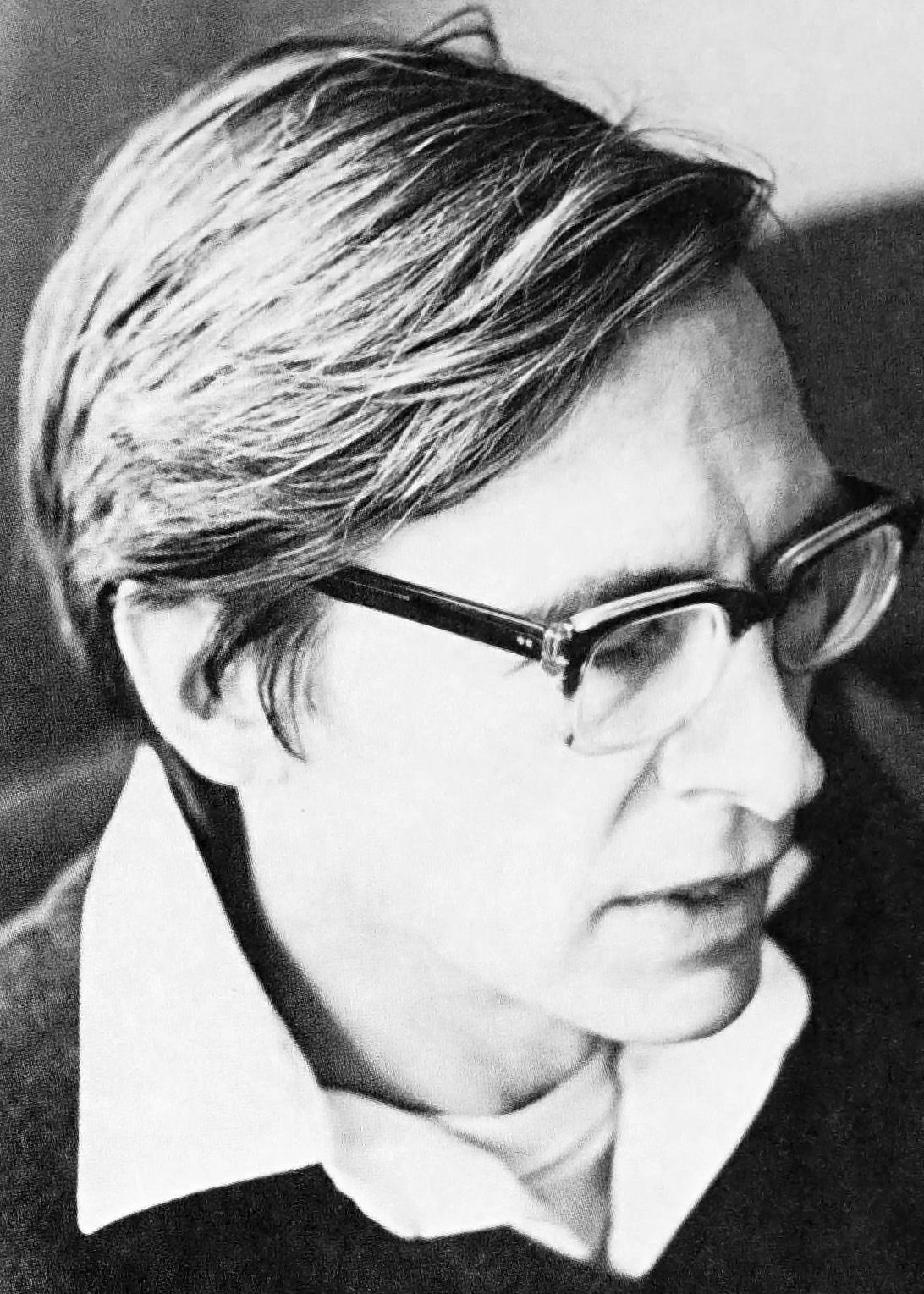
.jpg)
The least advantaged are not, if all goes well, the unfortunate and unlucky—objects of our charity and compassion, much less our pity—but those to whom reciprocity is owed as a matter of basic justice.
Rawls was born and raised in Baltimore, the son of a prominent lawyer. After Princeton and Cornell he spent time at Oxford among philosophers such as H. L. A. Hart and Isaiah Berlin, and from 1962 he taught at Harvard for over three decades. As a student he had thought of becoming a priest, but serving in the infantry in the Second World War, where he saw how arbitrarily death struck in battle, and learning of the Holocaust ended his Christian faith.
In the 1960s he opposed the Vietnam draft as unfair to poor and black Americans, and the war led him to ask how citizens could conscientiously resist an unjust government. His life’s work was a single theory, justice as fairness, which he restated in Political Liberalism, extended to relations between peoples in The Law of Peoples, and summarised in Justice as Fairness shortly before his death in 2002.
Key ideas
- Justice as fairness
- A just society is one of free citizens with equal basic rights, cooperating within an egalitarian economic system. Rawls first set out this theory in A Theory of Justice (1971) and kept reworking it for the rest of his life.
- The original position
- Rawls asks what terms of cooperation free and equal citizens would agree to under fair conditions. Behind a “veil of ignorance”, their representatives do not know their race, class or gender, so these arbitrary facts cannot bias the choice of principles.
- Two principles of justice
- Everyone has an equal claim to a fully adequate scheme of basic liberties. Social and economic inequalities are allowed only if the positions they attach to are open to all under fair equality of opportunity, and only if they benefit the worst-off most, the “difference principle”.
- Political liberalism
- Free institutions produce a lasting diversity of religious and moral worldviews. A liberal society can still be stable if citizens reach an “overlapping consensus”, each supporting the same political conception of justice for reasons found within their own worldview.
- Reflective equilibrium
- Our beliefs about justice are justified as they come to cohere, with specific judgements such as “racial discrimination is unjust” supporting general principles and being explained by them in turn.
- Tradition
- Western
- Region
- United States
- Schools
- Social contract theory
- Period
- Contemporary
- Themes
- How to govern
Influences
Influenced by
John Rawls1921–2002
Influenced by
John Rawls1921–2002
Where these links come from
- John Rawls drew on John Locke. Source: Leif Wenar, John Rawls, Stanford Encyclopedia of Philosophy
- John Rawls drew on Jean-Jacques Rousseau. Source: Leif Wenar, John Rawls, Stanford Encyclopedia of Philosophy
- John Rawls drew on Immanuel Kant. Source: Leif Wenar, John Rawls, Stanford Encyclopedia of Philosophy
Key works
- A Theory of Justice, 1971
- Political Liberalism, 1993
- The Law of Peoples, 1999
- Justice as Fairness: A Restatement, 2001
Sources
- Leif Wenar, John Rawls, Stanford Encyclopedia of Philosophy